Homemade Butterfinger Candy: The Best 4-Ingredient Recipe
Homemade Butterfinger Candy: The Secret to That Perfect Crunch
If you have ever stepped inside a professional confectionery, you know the air smells differently there. It is a thick, intoxicating mix of toasted nuts and boiling sugar. As a former pastry chef, I can tell you that making Homemade Butterfinger Candy is a true rite of passage.
There is a specific science to achieving that iconic, shatteringly crisp texture. This Homemade Butterfinger Candy relies on a precise temperature to create those thin, flaky layers. When you bite into it, the candy should feel light yet intensely peanutty.
Actually, this is my most requested treat during the holiday season. Friends and family cannot believe it only takes four main ingredients to replicate a world-famous candy bar. Once you master the “fast-roll” technique, you will never buy a store-bought bar again.
Why You’ll Love This Homemade Butterfinger Candy
-
Authentic Texture: It delivers that signature “honeycombed” crunch that defines a Butterfinger.
-
Better Ingredients: You control the quality of the peanut butter and the chocolate coating.
-
Perfect for Gifting: These bite-sized nuggets look beautiful tucked into a festive tin.
-
Crowd Favorite: This recipe is consistently the most asked-for item at any party.
Bakery-Level Pro Tips for Perfect Texture
In the world of candy making, heat is your best friend and your worst enemy. First, you must use a reliable candy thermometer. For this Homemade Butterfinger Candy, you need to hit exactly (the hard crack stage). If you pull the sugar too early, the candy will be chewy and stick to your teeth.
Furthermore, preparation is absolutely everything in this recipe. Because the sugar sets so quickly once it hits the peanut butter, you cannot be looking for your scissors. Have your wax paper laid out and your helper standing by before the sugar reaches temperature.
Additionally, I highly recommend using heavy-duty rubber gloves. The mixture is incredibly hot when you are rolling it. The gloves protect your hands so you can work with the speed required. Finally, let the centers rest overnight before dipping to ensure they are fully set and stable.
Ingredients You Will Need
These simple staples come together to create a complex, professional-grade confection:
-
2 Cups Sugar: Standard granulated white sugar works best for a clean snap.
-
1 Cup Light Corn Syrup: This prevents the sugar from crystallizing during the boil.
-
1/2 Cup Water: This helps dissolve the sugar crystals evenly.
-
2 Cups Creamy Peanut Butter: Use a standard commercial brand like Jif or Skippy for consistency.
-
Chocolate Coating Wafers: These are formulated to set hard at room temperature without tempering.
USA Substitutions
If you prefer a darker flavor, you can use dark corn syrup instead of light. This will give your Homemade Butterfinger Candy a slightly more “molasses” undertone. For the chocolate, you can use high-quality melting wafers or almond bark.
Avoid using “natural” peanut butter where the oil separates at the top. The excess oil in natural varieties can prevent the sugar from bonding correctly. This can result in a greasy candy that doesn’t have that classic flaky snap. If you have a peanut allergy, creamy almond butter is a tasty alternative.
Step-by-Step Instructions
-
Prep Your Station: Lay out 2-3 large pieces of wax paper on your counter. Have your heavy rubber gloves and a pair of clean kitchen scissors ready to go.
-
Boil the Syrup: In a heavy-bottomed saucepan, combine the sugar, corn syrup, and water.
-
Reach Hard Crack Stage: Cook the mixture over medium-high heat until it reaches . You may stir occasionally to ensure even heating.
-
Incorporate the Peanut Butter: Remove the pot from the heat. Quickly pour the hot syrup over the peanut butter and stir until smooth and combined.
-
Pour and Roll: Pour the hot mixture onto the wax paper. Working very fast, form the dough into long, thin rolls.
-
Cut the Pieces: Have your helper use the scissors to snip the rolls into bite-sized pieces immediately.
-
Speed is Key: You must finish rolling and cutting before the candy cools. If you wait too long, the mixture will become crumbly and impossible to shape.
-
The Long Rest: Let the pieces sit on the wax paper for several hours. I prefer letting them sit overnight to develop the best crunch.
-
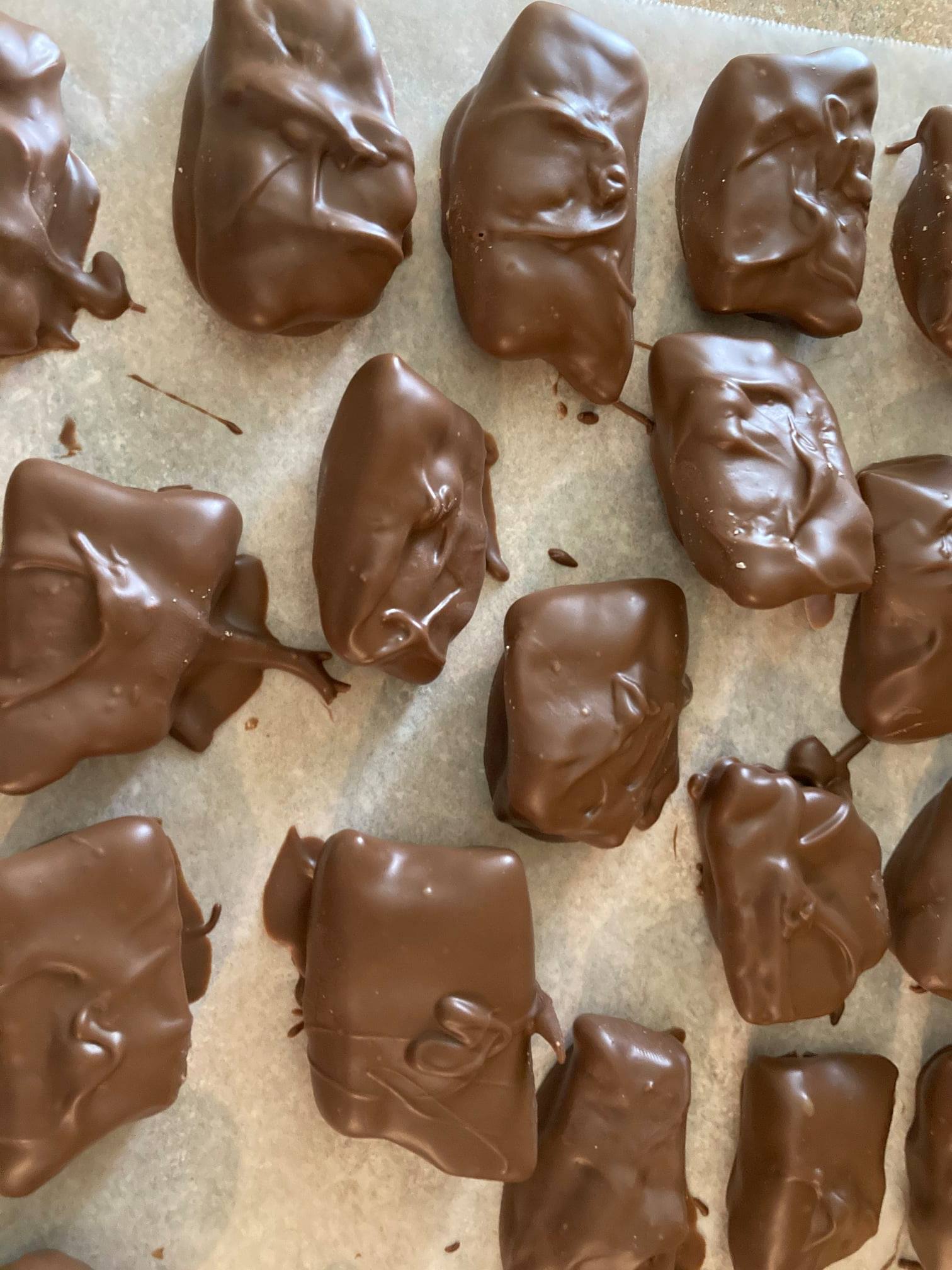
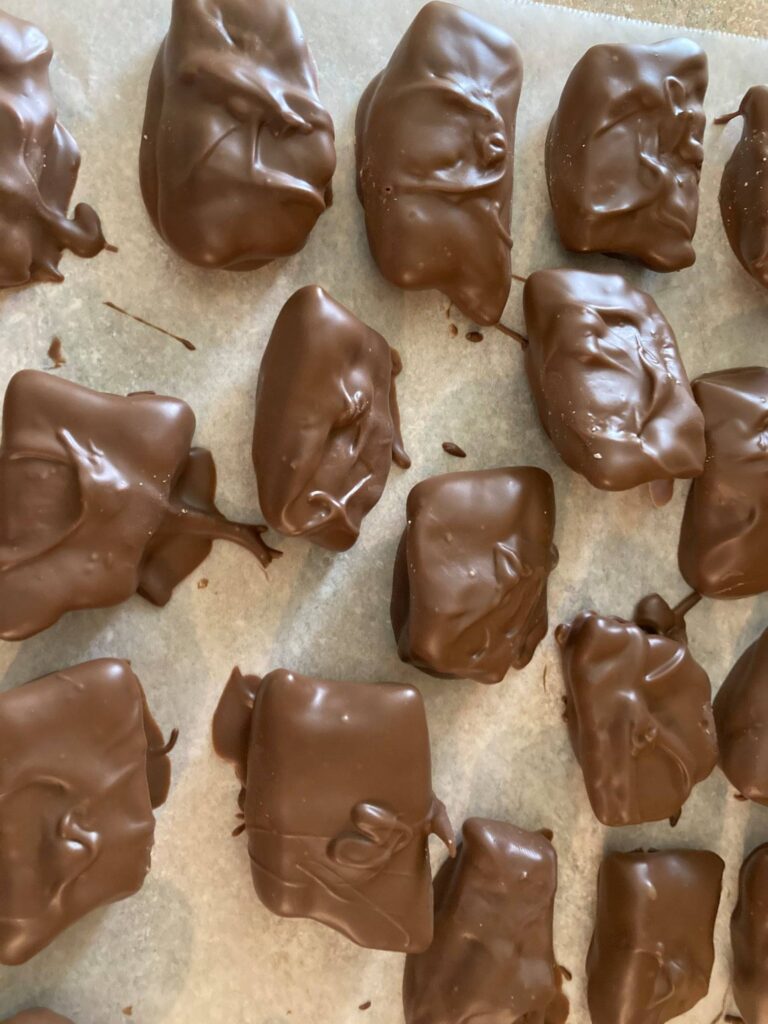
The Chocolate Dip: Melt your chocolate coating wafers according to the package instructions. Dip each piece and let it set on clean parchment paper.
Storage, Freezing, & Reheating
Store your Homemade Butterfinger Candy in an airtight container in a cool, dry place. Humidity is the enemy of hard candy, as it can make the pieces sticky. If stored correctly, they will stay fresh for up to three weeks.
You can also freeze these candies for up to two months. Ensure they are double-wrapped to prevent any freezer burn or moisture intake. When you are ready to eat them, let them come to room temperature while still in the container. This prevents condensation from forming directly on the chocolate.
Frequently Asked Questions about Homemade Butterfinger Candy
Why did my candy turn out crumbly while I was rolling it? The mixture cooled down too fast. You have to work with extreme speed while the sugar is still pliable. Having a helper is the best way to prevent this.
Can I use chocolate chips instead of wafers? You can, but you may need to add a teaspoon of coconut oil to help them melt smoothly. Note that chocolate chips may remain soft at room temperature unless tempered.
What if I don’t have a candy thermometer? You can use the “cold water test,” but it is much riskier. At , a drop of syrup in cold water should form hard, brittle threads that break easily.
Ingredients
Method